Diving and Snorkeling in Berlengas Natural Reserve
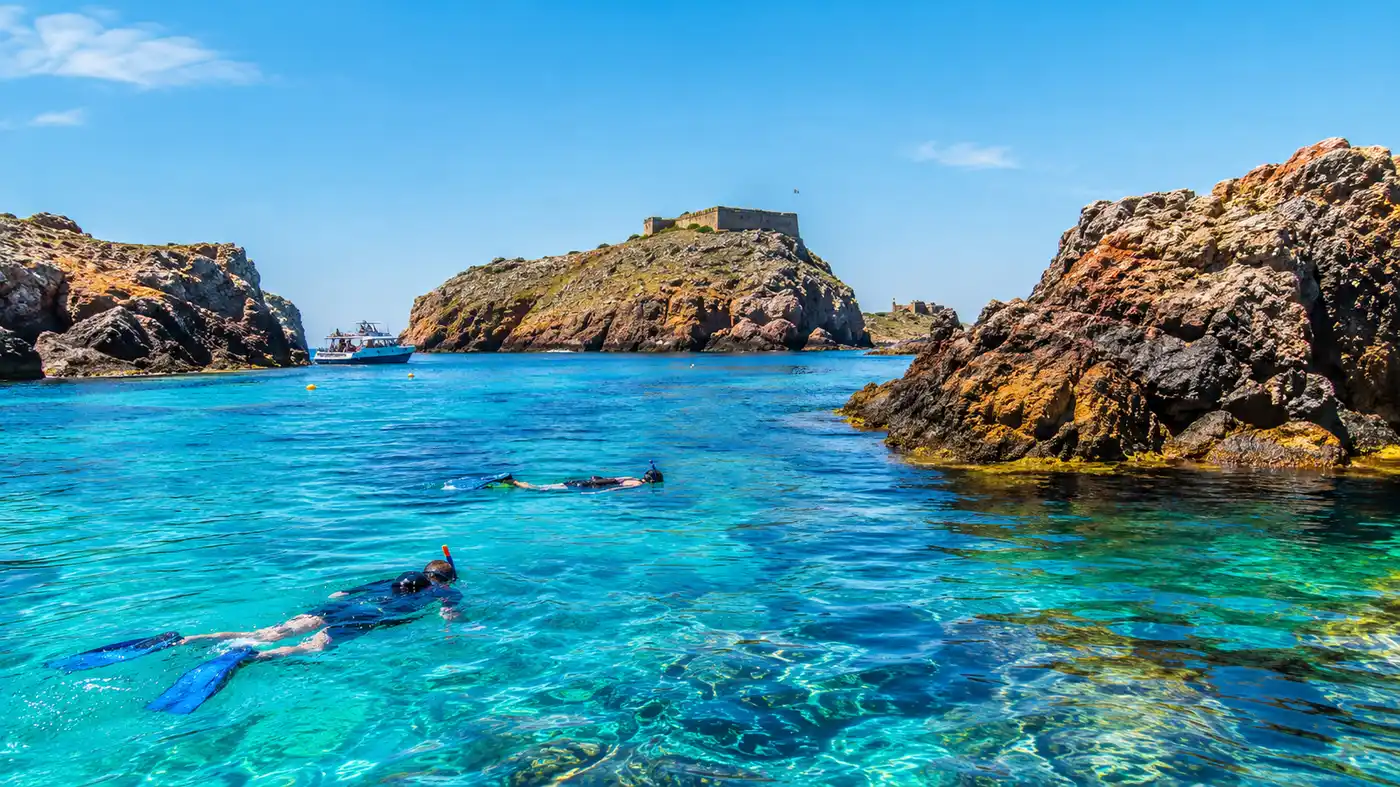
The Atlantic off central Portugal does not mess around. When you jump into the water around this tiny archipelago, the first thing hitting you is the sheer chill against your face, quickly followed by the realization that you are suspended over giant pink-tinted granite boulders tumbling down into an electric blue abyss. If you are planning a trip focused on berlengas diving, you should know right away that this is temperate North Atlantic diving at its most rugged, teeming with life because of ferocious nutrient-rich currents, not manicured tropical reefs.
Berlenga Grande and its surrounding jagged islets sit roughly six nautical miles off the coast of Peniche. Declared a UNESCO Biosphere Reserve back in 2011, this sliver of ocean acts as a sanctuary where commercial fishing is strictly prohibited in core zones. The result is an underwater oasis. Schools of sea bream blanket the rocky walls, octopus peer out from every granite fissure, and century-old shipwrecks sit silently on sandy bottoms. Whether you are hauling twin tanks for deep wreck penetration or just packing a mask and snorkel for a lazy afternoon floating near the harbor, this guide covers what you need to know before touching the water.
Book your berlengas experience:
Water Conditions and Ocean Climate in the Marine Reserve
Nobody comes to Berlenga for bathwater temperatures. Even in August, when Lisbon is baking at 36°C, the ocean here rarely climbs past 17°C at the surface. Drop down below fifteen meters and you will likely punch through a distinct thermocline where the gauge drops to 14°C or even 13°C. A 7mm wetsuit with a hood is the bare minimum for comfort, though plenty of local divers stick exclusively to semi-dry suits or drysuits throughout the year. If you get cold easily, double up on neoprene.
Visibility is notoriously fickle. On magical days in late September, you can peer down through 20 meters of glass-calm water and count the starfish resting on submerged ledges. Two days later, an offshore swell can churn up plankton and drop that line of sight down to five meters. Spring brings dense green blooms that reduce visibility but bring an explosion of feeding baitfish. Autumn tends to offer the most consistent conditions, with warmer surface layers and calmer seas between Atlantic low-pressure fronts.
Tides and currents dictate every single entry. The channel separating the islands from the mainland funnels raw oceanic power, creating drift conditions that can catch unprepared divers off guard. Most boat skippers from Peniche will assess the tidal flow before picking a mooring, often opting for sheltered bays along the southern or eastern flanks when the north wind - the famous Nortada - begins howling after midday.
Note: Currents can switch rapidly around the headlands during tide changes. Always carry a surface marker buoy (SMB) and a whistle on every dive, even when following an experienced guide.
Best Berlengas Scuba Diving Sites and Wrecks
The underwater topography around the archipelago mirrors the wild cliffs above. Submerged arches, labyrinthine swim-throughs, drop-offs, and sandy channels give every dive site a distinct personality. Because the islands have been an obstacle along busy shipping routes for centuries, the seabed is also an underwater graveyard for unfortunate vessels.
The wreck of the Andre S., often referred to locally as the Vapor Velho, is easily the most famous dive in the reserve. Sunk in the early decades of the twentieth century, this steamship lies broken apart across a rocky bed between 25 and 33 meters of depth. Massive boilers rest among twisted metal beams, now completely encrusted in yellow anemones, sponges, and gorgonians. Large conger eels poke their thick heads out of pipe fittings, while schools of bib and sea bass swirl overhead. You need an advanced open water certification to make the most of it, both for the depth and the occasional heavy surge that sweeps through the debris field.
For sheer marine biomass, Ilha Velha on the sheltered side of the main island is hard to beat. The site gently steps down from 8 meters to around 22 meters over massive granite slabs. Large spider crabs lumber across the rock faces, cuttlefish hover over sandy patches, and if you shine a dive light into dark crevices, you will almost certainly spot bright red lobsters waving their long white antennae. It is an easy, relaxing dive that works well for second tanks or less experienced divers trying out berlengas scuba diving for the first time.
Furado dos Frades offers a completely different vibe, built around a deep canyon cutting through granite walls. Light filters through cracks in the rock ceiling, creating dramatic shafts of turquoise beam against the dark bottom. Triggerfish are common here during late summer, aggressively patrolling their patches, and you might stumble across a stray torpedo ray half-buried in the gravel.
| Dive Site | Depth Range | Experience Level | Key Highlights |
|---|---|---|---|
| Andre S. (Wreck) | 25m - 33m | Advanced | Steamship boilers, conger eels, gorgonians |
| Ilha Velha | 8m - 22m | All levels | Spider crabs, octopus, lobster crevices |
| Furado dos Frades | 12m - 28m | Intermediate | Granite canyon, shafts of sunlight, triggerfish |
| Ponta da Quebrada | 18m - 38m | Advanced | Deep vertical wall, large pelagics, ocean currents |
| Cova do Sono | 6m - 16m | Beginner / Open Water | Shallow nursery, wrasse, small swim-throughs |
Further out, Ponta da Quebrada plunges into deeper water. This is where you keep your eyes peeled on the blue rather than the rocks. Ocean sunfish (Mola mola) occasionally drift through here between August and October to visit cleaning stations maintained by resident wrasse. Seeing a two-meter disk of cartilage floating silently alongside you in the Atlantic swell is something you do not forget in a hurry.
Snorkeling Berlengas: Top Spots and Clear Coves
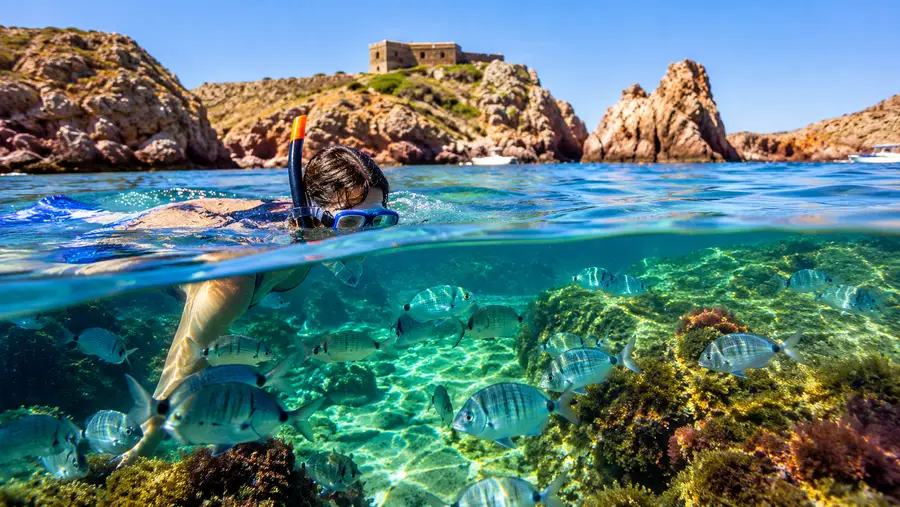
You do not need thirty kilograms of dive gear to appreciate the marine life here. In many respects, snorkeling berlengas is one of the most rewarding day-trip activities in central Portugal, provided you bring the right thermal protection. Attempting to snorkel for an hour in just swim trunks will leave your teeth chattering within ten minutes, so rent a 3mm or 5mm shorty wetsuit before leaving Peniche if you want to actually enjoy yourself.
The primary beach, Praia do Carreiro do Mosteiro, is the natural staging ground. Nestled inside a dramatic, cliff-rimmed cove right beneath the main walking paths, this beach looks like a postcard. The water inside the cove is intensely green and usually sheltered from the worst ocean swells. Wade right into the surf from the golden sand and you will find yourself surrounded by curious saddled sea bream within arm's reach.
Pro tip: Swim along the northern rock wall of Carreiro do Mosteiro cove toward the outer cave entrance. The rock walls are covered in colorful starfish and sea urchins that are easiest to spot in shallow water during early morning light.
Another fantastic spot for snorkeling is around the old fishermen's harbor and the concrete jetty where the supply boats dock. The pilings and submerged masonry act as an artificial reef, coated in mussels and barnacles that attract juvenile wrasse, blennies, and small shoals of sardines. Just keep a sharp eye out for incoming boat traffic, especially during peak afternoon hours when day-trippers are arriving.
Here are a few grounded pointers for spending time on the surface:
- Thermal layer: Wear at least a 3mm neoprene suit, because the water temperature saps your body heat faster than you expect.
- Bright surface float: Use a high-visibility tow float if you venture past the buoy line at the beach cove so local skippers can see you.
- Neoprene booties: Granite rocks and sea urchins make barefoot scrambling an exercise in regret.
- Mask defog: Clean your mask thoroughly before swimming out; high water clarity means nothing if your glass is fogged.
Swimming into the sea caves with a mask is mesmerizing, but you have to respect the surge. Swells that look harmless outside can compress inside narrow rock chambers, lifting you toward sharp barnacle-covered ceilings before dropping you just as quickly. Unless the sea is dead flat, enjoy the cave mouths from a safe exterior distance.
Book your berlengas experience:
Dive Centers, Charters, and Boat Logistics from Peniche
Berlenga Grande itself does not have a fully functioning, walk-in dive center with a compressor station where you can wander up and rent tanks on a whim. There are occasional seasonal operations, but virtually all diving berlengas is organized directly out of the port of Peniche on the mainland. You gear up at the dive shop in Peniche, load your kit onto a high-powered rigid inflatable boat (RIB), and blast out across the ocean.
The boat ride takes about 30 to 45 minutes depending on the chop. That crossing over the open Atlantic can be rough. If you have any history of motion sickness, take medication an hour before stepping onto the boat, because assembling scuba gear on a rolling RIB with the smell of two-stroke engine exhaust around you is a classic recipe for misery.
Most dive shops run two-tank morning trips. You will head out around 8:30 AM, do your first deep dive, endure an hour-long surface interval on the boat or on the island's dock, do a second shallower dive, and get back to Peniche by early afternoon. A standard two-tank boat dive package typically costs between €75 and €95, excluding equipment rental. Full kit rental will add around €25 to €35 to the total bill.
When selecting an operator in Peniche, look for outfits that emphasize small group sizes and have sheltered staging areas at the marina. A few things worth double-checking include:
- Boat type: Large RIBs with tank racks make gearing up in ocean swell vastly easier than crowded open boats.
- Island stopover: Some operators pull into the Berlenga dock during the surface interval, letting you stretch your legs on dry land and use the restroom.
- Spare gear on board: Reputable shops carry extra mask straps, O-rings, and spare weights on the boat so a minor equipment failure doesn't ruin your morning.
- Guide ratios: A ratio of no more than six divers per instructor is crucial given the variable Atlantic visibility and currents.
If you have non-divers traveling with you, they can book a standard seat on a regular ferry from Peniche to Berlenga Grande, hike the cliffs, relax on the beach, and meet up with you on the island dock while you take your surface break.
Permits, Regulations, and Planning Your Trip
Because the archipelago is a protected nature reserve, human visitation is strictly controlled to minimize ecological damage. The Portuguese government caps the number of visitors allowed on the main island at any one time. If you travel independently on a ferry to snorkel, you are legally required to register online for a Berlengas pass entry permit before boarding. The pass costs just a few euros and generates an individual QR code that officials occasionally check at the Peniche marina or on the island jetty.
If you are heading out with a licensed scuba diving school from Peniche, the dive center usually handles your maritime reserve clearance as part of the booking, since your primary activity is offshore on a dive vessel. Still, it is smart to confirm whether they need your passport or national ID details in advance to submit the environmental manifests.
Spearfishing is strictly forbidden throughout the entire marine perimeter. Taking anything from the ocean floor - whether that is a dried sea fan, an empty sea urchin shell, or a piece of shipwreck metal - carries hefty environmental fines from the Maritime Police, who patrol the reserve regularly in stealth interceptor boats. Treat the park as a museum where you look with your eyes and leave with your photos.
The dive season kicks off in May and winds down toward early November. Peak months are July through September, when water conditions are at their calmest and maritime operations run daily. Outside of this window, winter Atlantic gales make the crossing dangerous and dive centers generally shut down their boats until spring returns.
Frequently Asked Questions about berlengas diving
What is the typical water temperature when scuba diving in Berlengas?
Water temperatures range between 13°C and 18°C depending on the depth and month. July to October offers the highest surface temperatures around 16°C to 18°C, but deep sites below 20 meters consistently stay around 14°C year-round. A 7mm wetsuit with a hood or a semi-dry suit is highly recommended.
Can beginners do scuba diving in the reserve?
Yes, but site selection is critical. Sheltered bays like Cova do Sono and Ilha Velha offer calm waters between 8 and 14 meters with minimal current, making them great for Open Water divers. However, deeper sites like the Andre S. wreck and Ponta da Quebrada demand an Advanced Open Water certification and comfort with ocean currents.
Is it better to snorkel from the beach or take a boat tour?
Snorkeling directly from the beach at Carreiro do Mosteiro is easy and scenic, but taking a small boat tour gets you out to offshore arches and clearer coves that are inaccessible by foot. If you only have a few hours, the beach cove provides plenty of fish life right out of the gate.
What marine life can I expect to see?
Common sightings include large octopus, spider crabs, European lobsters, conger eels, schools of sea bass, and triggerfish. In late summer, ocean sunfish (Mola mola) frequently pass by outer points, and dolphins are regularly spotted during the boat crossing from Peniche.
Quick Reference
- Water temp: 13°C - 18°C (7mm neoprene required)
- Boat crossing: 35-45 minutes from Peniche harbor
- Best diving window: July through October
- Visibility: 6 to 20 meters depending on swell
- Permit: Required for mainland visitors landing on foot
Book your berlengas experience:
The Bottom Line
Diving here is about as far from a predictable Caribbean drift dive as you can get, and that is precisely why it is worth doing. It demands a bit of resilience against the cold water, an iron stomach for the open boat ride across the Batel channel, and a healthy respect for Atlantic currents. In exchange, the marine reserve delivers raw, dramatic underwater landscapes that feel truly wild. Slip into a thick suit, clean your mask, and drop down into the blue - you will quickly understand why Portuguese divers consider this battered patch of granite their crown jewel.
Read more about berlengas.